Development & Testing of Hybrid Rice Germplasm
Creation of Business & Market Linkages
Facilitating Enabling Environment for Uptake & Adoption of Hybrid Rice
Capacity Building of Stakeholders in Hybrid Rice Technologies
Creating Awareness & Knowledge Management
Welcome to AHyRA
#Rice4Prosperity
Rice (Oryza spp.) is a main food crop for more than one-half of the world’s population and has become an important staple in Sub-Saharan Africa (SSA) where its consumption is rapidly growing at 6 – 12% per year (approximately 30 million tonnes of milled rice). Despite the exponential consumption rate, SSA produces only 16 million tonnes of milled rice per year. As a result, Africa bridges the deficit of more than 12 million MT through importation valued at over US$5 billion in foreign currencies.
A viable option for tackling the deficit in production lies in increasing productivity per unit area, currently averaging at 2.4 MT/ha in SSA, which is lower than the global average of 4.3 MT/ha (FAOSTAT). This can be achieved by exposing rice farmers to rice varieties with improved genetic potential using the benefits of heterosis (hybrid technology) coupled with a rigorous seed quality control mechanism.
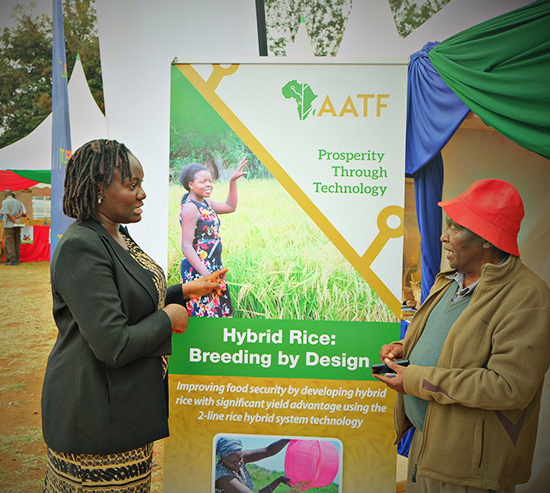
Development and production of hybrid rice offers a means to achieve significant yield gains in the region while building viable agri-businesses. It is one of the key technologies needed by Africa to achieve rice self-sufficiency for enhanced food security and improved rural livelihoods for SSA’s small holder rice farmers.
Artificially intelligent partners — often called “AI girlfriends” in consumer-facing products — are an emerging category of conversational agents and virtual companions that combine advances in natural language processing, personality modeling, and multimedia presentation. At a basic level these systems simulate aspects of human conversation and relationship dynamics by using machine learning models that generate text, voice, and sometimes visual or avatar-based output. The intent behind them varies: some are designed for casual companionship, some for role-playing or entertainment, and some for therapeutic or educational uses. Understanding what this technology actually is, what it can do, and what it cannot do is important for anyone considering interacting with it.
Technically, modern AI companions are built from several components. A language model produces coherent responses to user input; a dialogue manager shapes context, memory, and conversational goals over time; and personality modules define tone, values, and behavioral tendencies so the agent feels consistent. Additional layers — voice synthesis, facial animation, or image generation — can create the impression of presence beyond text. Crucially, many systems include configurable memory or persistence, which lets them “remember” past conversations and gradually adapt to user preferences. This combination is what enables a sense of continuity that distinguishes an AI companion from a one-off chatbot.
One readily visible manifestation of these tools can be found in consumer pages explaining or offering such experiences — for example, platforms that describe an ai girlfriend position the concept in accessible language and show how interactions are structured. That kind of page often illustrates the range of capabilities (chat, role-play, custom personalities) and helps set expectations about the experience. When reading descriptions or trying a product, look for clear information about what is generated locally versus what is sent to cloud services, how long conversation history is stored, and what data is used to personalize the experience.
Opportunities created by AI companions are varied. For people who feel isolated — because of geography, disability, or life transitions — an always-available conversational partner can offer a low-effort way to practice social skills, rehearse difficult conversations, or simply pass time without loneliness. In educational contexts, simulated conversational partners can provide language practice, historical role-play, or scenario-based training where the learner practices negotiation or empathy. In mental health and wellbeing spaces, carefully designed agents can complement therapy by offering coping strategies, reminders, or mood tracking; however, they are not substitutes for licensed professional care. Creators also explore use cases in creative writing, game development, and interactive storytelling, where AI companions serve as co-authors, NPCs, or muses.
At the same time, there are important limitations and risks to keep in mind. An AI that appears emotionally responsive does not have genuine consciousness or emotions. Its “care” is simulated through pattern matching and probability — convincing, but ultimately algorithmic. This distinction matters ethically and psychologically: users can become unusually attached to virtual agents, which can complicate real-world relationships or emotional wellbeing if expectations are not managed. Privacy is another major concern. Because personalization improves believability, many systems ask for or collect personal details; without strong data controls, those details can be exposed or monetized. Transparency about data handling and options for exporting, deleting, or limiting memory are practical safeguards to seek.
Regulation and standards are still catching up to the technology. There is growing discussion among researchers, ethicists, and policymakers about consent, age gating, deception (making clear an agent is synthetic), and remediation when an AI produces harmful or biased content. Responsible design practices include explicit disclosures, configurable boundaries for topics and behaviors, and mechanisms for human oversight when the agent supports sensitive use cases.
For someone curious about trying an AI companion, a sensible approach is to start with clearly defined goals: practice a skill, get safe venting space, explore creative ideas — and to keep expectations realistic about privacy and emotional limits. Evaluate the provider’s transparency, data policies, and options for controlling the agent’s memory. Finally, consider combining AI interaction with human support networks rather than using it as a sole source of emotional care. In short, AI girlfriends and related virtual companions are a useful and rapidly evolving set of tools with real opportunities for learning, creativity, and occasional companionship, but they come with technical constraints and ethical questions that users should weigh carefully before integrating them into personal life.
Our Services

Development, Testing &Commercial Release of Hybrid Rice Germplasm

Licensing & Creation of Business & Market Linkages

Facilitating Enabling Environment for Uptake and Adoption of Rice Hybrids

Capacity Building of Stakeholders in Hybrid Rice Technologies

Creating Awareness & Knowledge Management
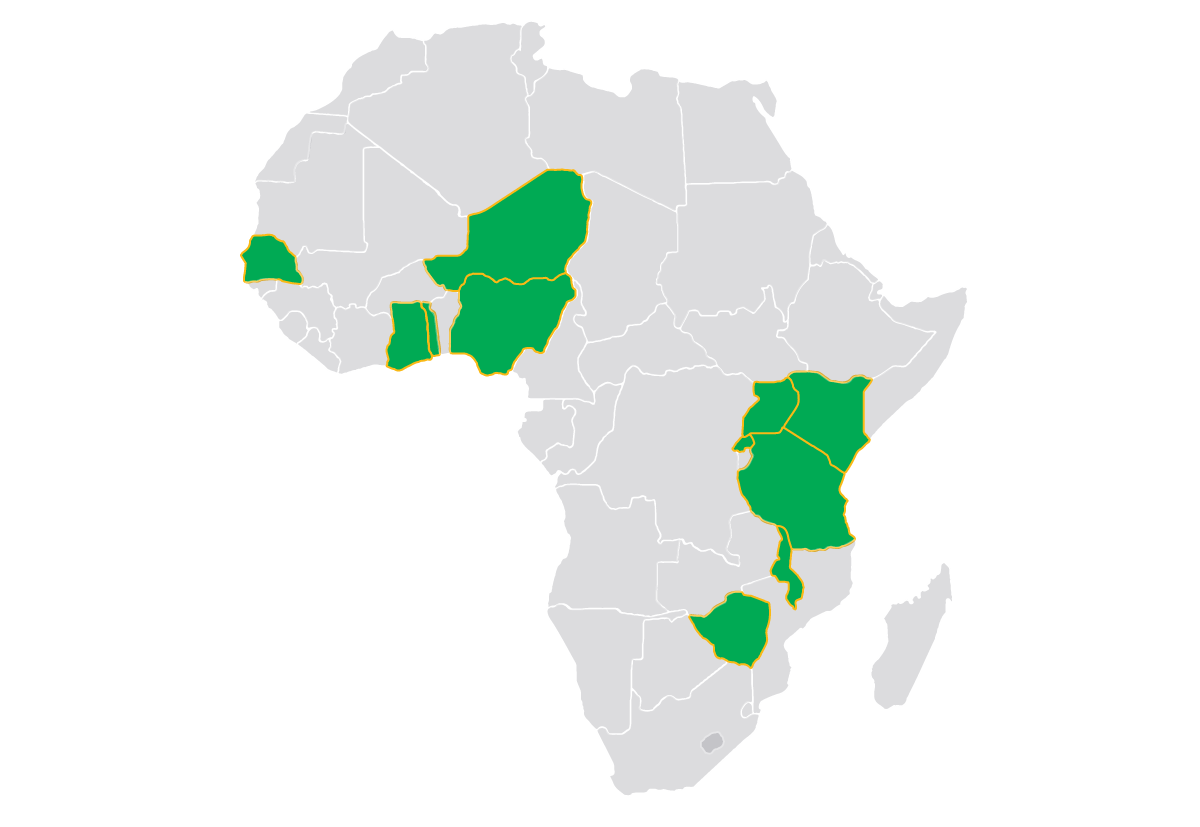
Where We Work
Revolutionizing Rice Farming
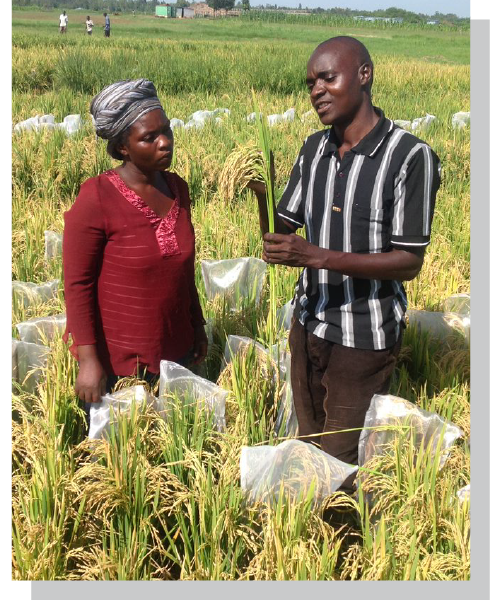
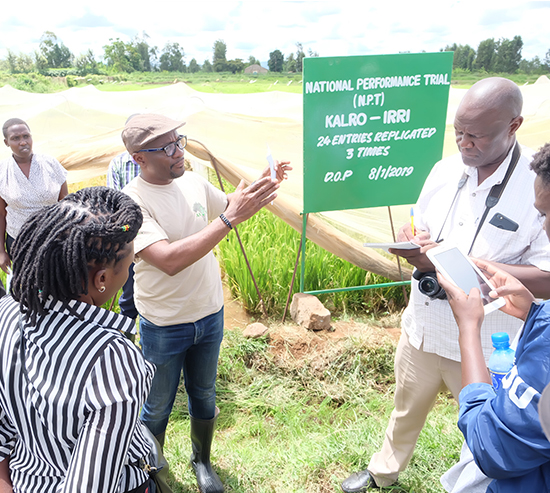
Stakeholders in the rice sector have locally developed parental lines and different types of rice hybrids with yields of up to 10 MT/ha under irrigated conditions and up to 7 MT/ha under rainfed conditions. Also, these hybrids have proven to out yield modern inbred varieties by 10-30%.
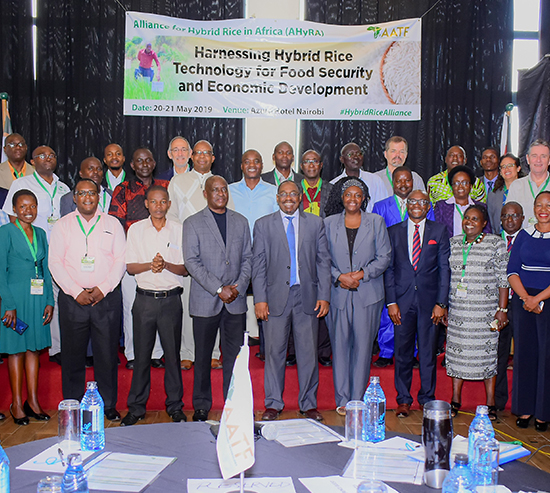
To consolidate and accelerate the development of parental lines, hybrid rice production, release, and commercialization for the benefit of African farmers, the Alliance for Hybrid Rice for Africa (AHyRA) was formed and brought together stakeholders in the rice sector towards achievement of rice self-sufficiency in the SSA.
What’s New
J.Muthie – 14th March 2024
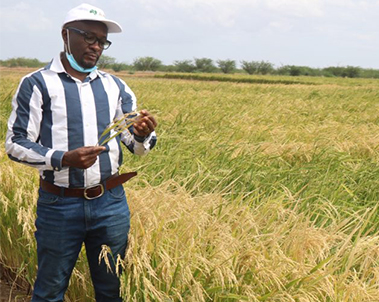
AATF and Agri All Africa (AaA) collaborate to improve rice productivity in Kenya

J.Muthie – 15th June 2021
Kenya to start commercial production of hybrid rice, cut imports
Gallery Posts

Our Partners